
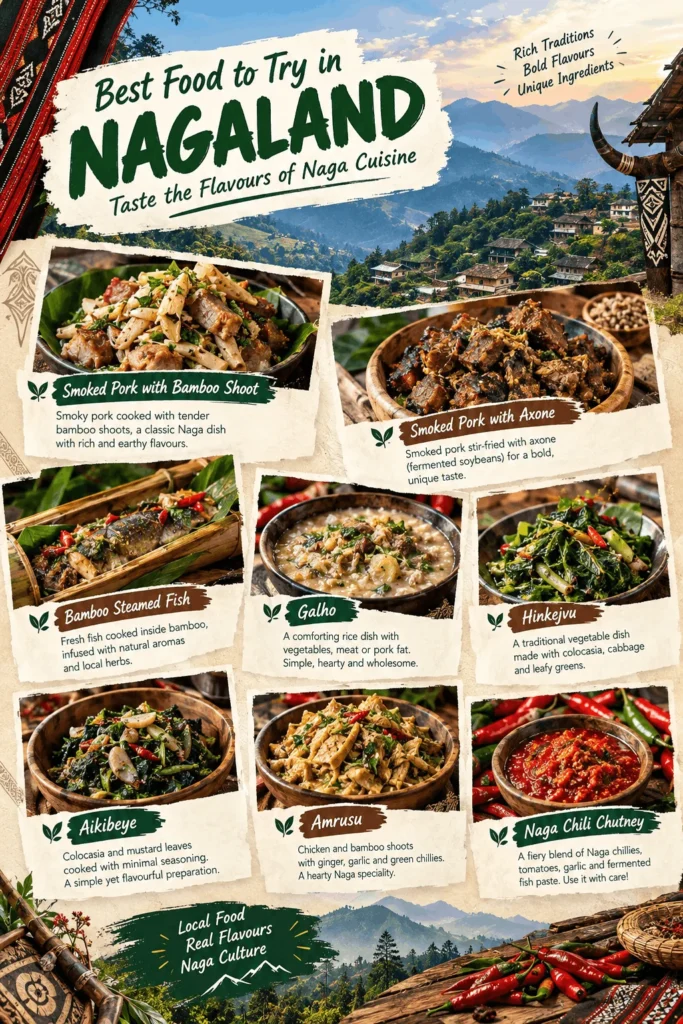
The best food to try in Nagaland is a delicious introduction to the state’s diverse tribal cultures, locally grown ingredients, and traditional cooking methods. From smoky pork and fermented soybean preparations to bamboo-steamed fish and comforting rice dishes, Naga cuisine offers flavours that are distinctive without relying heavily on complicated spice blends. Rice is a staple, while vegetables, herbs, bamboo shoots, fermented ingredients, and locally available meats play an important role in everyday meals.
For travellers exploring Nagaland, trying local food is more than simply finding something to eat. It is an opportunity to understand the connection between food, agriculture, community, and Naga traditions. This guide covers the best food to try in Nagaland, including popular dishes, vegetarian options, local ingredients, and practical tips for enjoying Naga cuisine.
What Makes Naga Cuisine Special?
Naga cuisine varies across communities and locations, so there is no single dish that represents every household or tribe. Traditional cooking often highlights the natural flavour of ingredients rather than masking them with elaborate sauces.
Some of the most characteristic elements include:
- Smoked and slow-cooked meat
- Bamboo shoots
- Fermented soybean, commonly known as axone or akhuni
- Fresh and fermented vegetables
- Local herbs and leafy greens
- Rice and rice-based preparations
- Naga chillies
- Traditional smoking, steaming, boiling, and fermentation techniques
Tourism Nagaland describes culinary tourism as an important part of the state’s cultural experience, with different tribes contributing their own culinary identities and traditional techniques.
Traditional Naga Food You Should Try
If you are visiting Nagaland for the first time, start with familiar ingredients such as pork, fish, rice, and vegetables before exploring stronger fermented flavours. This makes it easier to appreciate the variety of traditional Naga food.
Famous Food in Nagaland: Dishes You Shouldn’t Miss
The famous food in Nagaland includes several preparations that showcase the region’s use of smoking, fermentation, bamboo shoots, and local produce.
1. Naga Pork with Bamboo Shoot
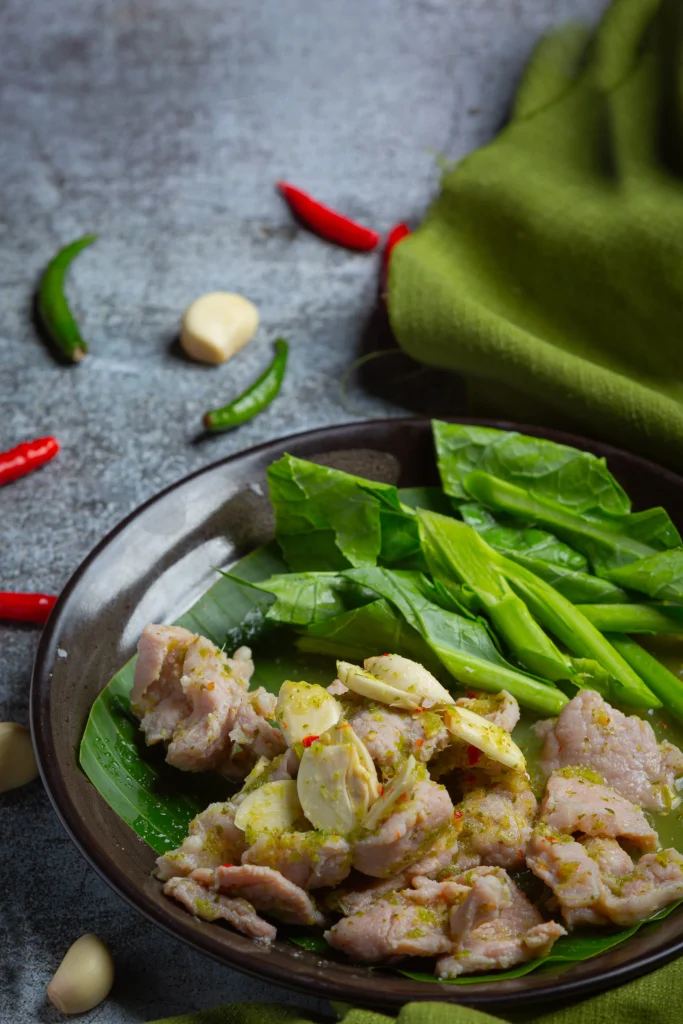
Naga pork with bamboo shoot is one of the most recognizable dishes associated with the region. Pork is commonly cooked with bamboo shoots, creating a combination of rich, smoky, and mildly sour flavours.
In Kohima and other parts of Nagaland, smoked pork paired with bamboo shoot is a popular way to experience local cuisine.
2. Smoked Pork with Axone

For travellers interested in fermented flavours, smoked pork with axone is an important dish to look for. Axone, also called akhuni, is made from fermented soybeans and is used in stews, chutneys, and meat preparations.
The combination of smoked pork and fermented soybean creates a deep, distinctive flavour. Axone is also used with dried fish, beef, and vegetables in different preparations.
3. Bamboo Steamed Fish
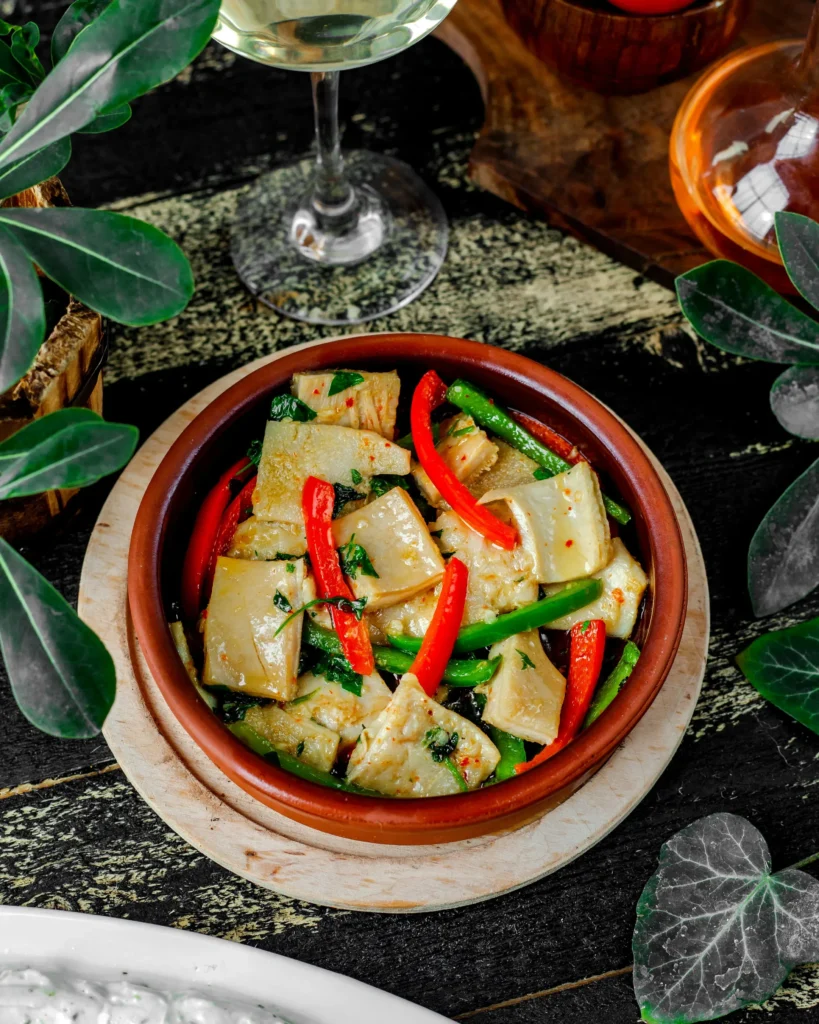
Bamboo steamed fish demonstrates how bamboo is used in traditional Naga cooking. Fish is seasoned and cooked inside bamboo, allowing the ingredients to absorb subtle earthy aromas during cooking.
This preparation is particularly associated with Ao Naga food traditions and is highlighted by official tourism sources as a local speciality.
4. Galho

Galho is a comforting rice-based dish that can be compared loosely with khichdi because of its soft and soupy consistency. It can include vegetables, meat, pork fat, or smoked pork depending on the preparation.
Vegetarian versions are also possible, making Galho a useful option for travellers looking for a simpler local meal.
Famous Dishes of Nagaland for Different Tastes
The famous dishes of Nagaland are not limited to meat-based preparations. Visitors can find vegetable dishes, fermented ingredients, rice preparations, snacks, and desserts as well.
1. Hinkejvu and Aikibeye
Hinkejvu is a simple vegetable preparation made using ingredients such as colocasia, cabbage leaves, mustard leaves, and French beans. It is boiled with minimal seasoning and can be served as part of an everyday meal.
Aikibeye also uses colocasia and mustard leaves and is traditionally prepared with little water and seasoning. These dishes are useful choices for visitors who want to explore the vegetable side of authentic Naga dishes.
2. Amrusu
Amrusu is associated with the Ao community and combines ground rice, chicken, and bamboo shoots with ingredients such as ginger, garlic, and green chillies. Its hearty texture makes it a comforting choice for travellers looking for something beyond the more widely known pork dishes.
3. Akini Chokibo

Akini Chokibo combines perilla seeds with snails and may also include pork or axone. It represents the diversity of ingredients found in Naga cuisine and is particularly interesting for adventurous food travellers.
4. Nap Naang
For something sweet, try Nap Naang, a black rice pudding prepared with black rice, milk, sugar, and water. It provides a gentle contrast to the smoky, fermented, and spicy flavours found in many savoury Naga dishes.
Authentic Naga Dishes and Local Ingredients
The appeal of authentic Naga dishes lies largely in the ingredients and techniques used to prepare them. Bamboo shoots add acidity and character to many meat dishes, while axone introduces a fermented, savoury depth.
Naga chillies are another defining ingredient. Naga chili chutney can be particularly intense because it may use Naga King Chilli or other very hot local chillies. In Dimapur, official tourism information describes the chutney as a preparation combining chilli with ingredients such as roasted tomatoes, garlic, and fermented fish paste.
Travellers who are sensitive to spicy food should ask about the chilli level before ordering. A dish may be mild on its own but served with a very hot chutney or chilli accompaniment.
Traditional Food in Kohima and Other Places to Explore
If you want to experience traditional food in Kohima, local restaurants, food markets, cultural events, and community-based food experiences can be useful places to start. Kohima is an important entry point for exploring Naga culture and cuisine, while Mokokchung and Dimapur also have food traditions worth discovering.
Mokokchung is particularly associated with Ao Naga culture and offers dishes such as bamboo-steamed fish, smoked pork with bamboo shoots, tenga patta, anishi, and preparations using axone.
The Hornbill Festival also provides an opportunity to encounter local cuisine alongside performances, handicrafts, and other aspects of Naga culture. The official festival programme includes a local cuisine and food festival component.
Practical Tips for Trying Naga Food
Before ordering the best food to try in Nagaland, keep these points in mind:
- Ask about spice levels: Naga chilli can be extremely hot, so request a milder version if needed.
- Try fermented foods gradually: Axone and other fermented ingredients have strong aromas and flavours that may be unfamiliar.
- Ask about ingredients: Some dishes may contain pork, beef, fish, fermented fish, or other animal-based ingredients.
- Explore beyond one dish: Naga cuisine differs between communities, so try rice dishes, vegetables, meat, fish, and chutneys.
- Choose local food experiences: Markets, cultural festivals, local eateries, and community-based experiences can provide a broader introduction to regional cuisine.
- Pair wisely: Many rich or spicy dishes work well with plain steamed rice and simpler vegetable preparations.
Common Mistakes to Avoid When Exploring Naga Cuisine
A common mistake is assuming that all Naga food is simply extremely spicy. While chillies are important, the cuisine also depends on smoking, fermentation, bamboo shoots, herbs, seasonal vegetables, and slow cooking.
Another mistake is trying several strongly fermented dishes at once. If you are new to fermented soybean or fermented fish, begin with a small portion and combine it with rice or milder accompaniments.
Finally, do not judge a dish only by its appearance. Traditional preparations can look simple because they focus on the natural flavour of their ingredients.
FAQs About the Best Food to Try in Nagaland
What is the best food to try in Nagaland for first-time visitors?
Smoked pork with bamboo shoot, smoked pork with axone, bamboo-steamed fish, and Galho are good starting points because they introduce several important elements of Naga cuisine.
What is the famous food in Nagaland?
Some well-known examples include smoked pork with bamboo shoots, smoked pork with axone, bamboo-steamed fish, Galho, and Naga chilli chutney. The exact preparation varies by community and location.
Is Naga food very spicy?
Some Naga dishes and chutneys can be extremely spicy, particularly preparations using Naga King Chilli. However, not every traditional dish is hot. Simple vegetable dishes, Galho, rice, and some fish preparations can be much milder.
What are some vegetarian Naga dishes?
Hinkejvu, Aikibeye, vegetable versions of Galho, and other preparations using leafy greens, colocasia, cabbage, beans, and local vegetables are examples of vegetarian-friendly Naga food.
Where can I try traditional Naga food?
Kohima, Dimapur, and Mokokchung are useful places to explore local cuisine. Food festivals, local eateries, markets, and community-based experiences can also provide opportunities to try regional dishes.